SPACE

Inane baanter or words of wisdom - you decide...
Post Reply
User avatar
F-ZeroOne
Baaaaaaa!
Baaaaaaa!
Posts: 8212
Joined: Wed Sep 29, 2004 8:27 pm 0

Re: SPACE

Post by F-ZeroOne »

I may have misunderstood what you're asking, but I'm pretty sure the ISS has been photographed passing in front of the Sun as well - is this the sort of thing you mean?

Image

Just on the subject of visibility of the ISS in general - to the naked eye, it appears to be a bright dot. If you've seen Mars at its closest, or Jupiter, on a clear night, roughly about the same brightness.

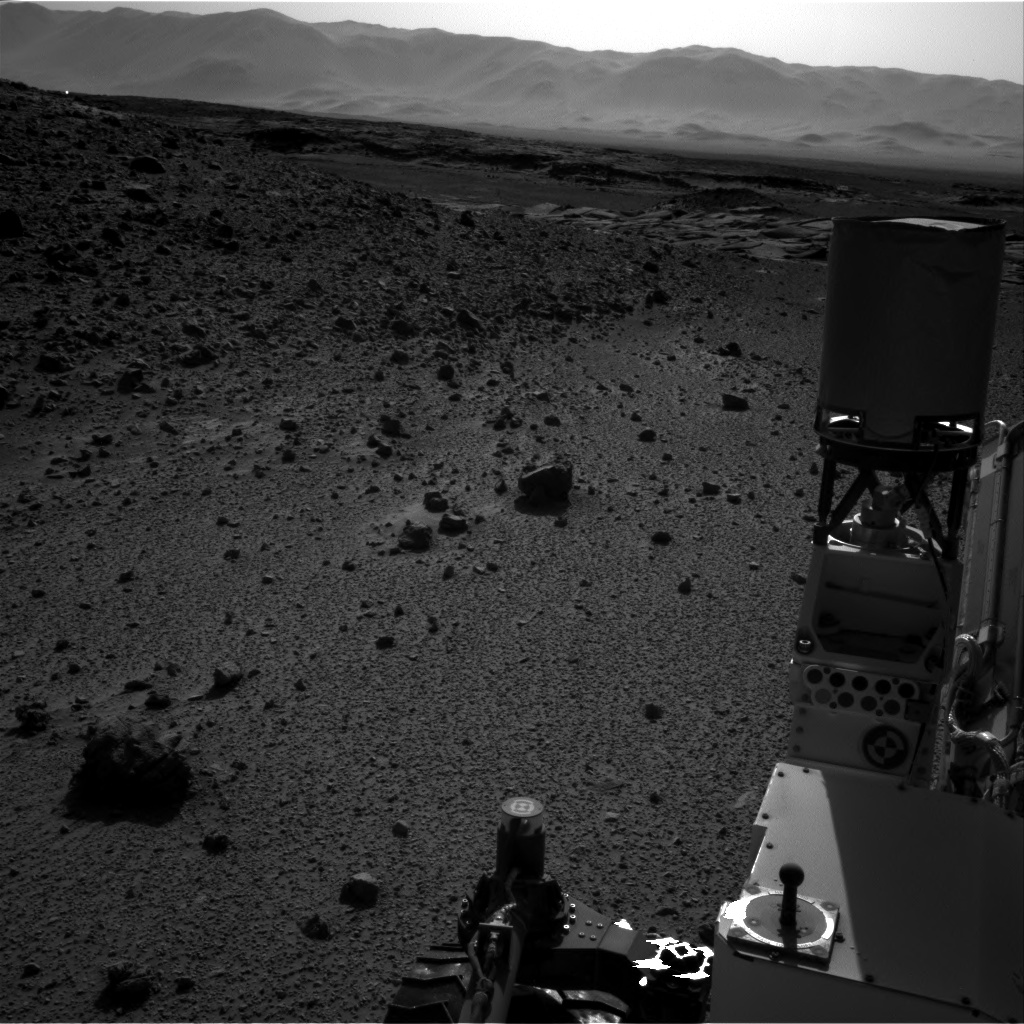
"Flash" image on Mars: suspected to be either a cosmic ray interacting with the camera, or possibly sunlight reflecting off a rock. Mysterons have yet to be ruled out, though. :)
Last edited by F-ZeroOne on Wed Apr 09, 2014 8:53 pm 0, edited 2 times in total.
"Stars don't twinkle in space." - Char Aznable.
User avatar
zip accident
Sheepie Whore
Sheepie Whore
Posts: 13928
Joined: Sun Feb 20, 2005 1:58 pm 0
Location: Bristol, UK

Re: SPACE

Post by zip accident »

F-ZeroOne wrote:I may have misunderstood what you're asking, but I'm pretty sure the ISS has been photographed passing in front of the Sun as well - is this what you're looking for?

Image
Yes.

Well, I was hoping for more ISS and less moon, but basically, that's it. Thanks. :)
"My way is the way of not fighting":- the book of Enter the Dragon.
User avatar
F-ZeroOne
Baaaaaaa!
Baaaaaaa!
Posts: 8212
Joined: Wed Sep 29, 2004 8:27 pm 0

Re: SPACE

Post by F-ZeroOne »

You've welcome - most of the images I've seen like that, the ISS always seems to be about that size relative to the Moon/Sun.
"Stars don't twinkle in space." - Char Aznable.
User avatar
pogo
Sheepie Whore
Sheepie Whore
Posts: 14180
Joined: Tue Sep 10, 2002 8:28 pm 0
Yahoo Messenger: BrassSparrow
Location: County Durham

Re: SPACE

Post by pogo »

That agrees with my calculations: it's about 3% the size (diameter or maximum extent).

I was also going by my own experience photographing the moon. I've tried photographing the moon in ideal conditions: full moon on a clear night when it was almost straight overhead. As an added bonus I could easily do it from a spot with no streetlights in the yard, and being straight up it was easy to stabilise against a wall. With my 70-300mm lens at maximum zoom I could only get a pretty small image of the moon, only 1/6 the height of the image. And even that when I looked at it 1:1 pixels was pretty blurry, I think due to atmospheric distortion.

So something like that image would require much better equipment, probably a telescope, maybe built up a mountain to overcome atmospheric distortion.
User avatar
F-ZeroOne
Baaaaaaa!
Baaaaaaa!
Posts: 8212
Joined: Wed Sep 29, 2004 8:27 pm 0

Re: SPACE

Post by F-ZeroOne »

As far as I understand it, pretty much all the shots like that are taken through a telescope. Or a camera that is virtually indistinguishable from one except in name. :)
"Stars don't twinkle in space." - Char Aznable.
User avatar
ElfQrin
Baaaaaa!
Baaaaaa!
Posts: 4384
Joined: Mon Jul 28, 2003 12:55 pm 0
Location: Italy
Contact:

Re: SPACE

Post by ElfQrin »

F-ZeroOne wrote: "Flash" image on Mars: suspected to be either a cosmic ray interacting with the camera, or possibly sunlight reflecting off a rock. Mysterons have yet to be ruled out, though. :)
This is another "flash" from the day before (Sol 588, see top left corner). It's weird that cosmic rays always fall on the CCD where the horizon is. It is true that flashes only appear on the right mastcam, but images on left and right cameras are not took at the very same time, rather "within a second".

Image
User avatar
pogo
Sheepie Whore
Sheepie Whore
Posts: 14180
Joined: Tue Sep 10, 2002 8:28 pm 0
Yahoo Messenger: BrassSparrow
Location: County Durham

Re: SPACE

Post by pogo »

Yes, cosmic rays there seem too much of a coincidence, unless there are many more in photos they're not showing us. Shiny rocks seems more plausible. Or Martians.
User avatar
gumboot
Baaaaaaa!
Baaaaaaa!
Posts: 7652
Joined: Sun Aug 26, 2007 3:42 am 0
Location: trumpstain!

Re: SPACE

Post by gumboot »

zip accident wrote:Well, I was hoping for more ISS and less moon, but basically, that's it. Thanks. :)
You can change the proportions by standing on a soapbox to take the picture.
User avatar
Dvorak
Baaaaaa!
Baaaaaa!
Posts: 4560
Joined: Wed May 08, 2002 7:37 am 0
Yahoo Messenger: d3dxquaternion
Location: Germany

Re: SPACE

Post by Dvorak »

Using NASA's Kepler Space Telescope, astronomers have discovered the first Earth-size planet orbiting a star in the "habitable zone"
...
Although the size of Kepler-186f is known, its mass and composition are not. Previous research, however, suggests that a planet the size of Kepler-186f is likely to be rocky.
http://www.nasa.gov/ames/kepler/nasas-k ... other-star


There! :)
>take off sunglasses
Seamen and fishermen alike swear to have heard voices in the rising tide. Inhuman screams, some of them say.
User avatar
Darkflame
Sheepie Whore
Sheepie Whore
Posts: 18236
Joined: Mon Mar 31, 2003 11:06 am 0
Location: Not the UK

Re: SPACE

Post by Darkflame »

500 light years hmz...Thats still 2500 years away at 20%c
Better get working on immortality as even that speed is too slow for time dilation to help.
User avatar
Dvorak
Baaaaaa!
Baaaaaa!
Posts: 4560
Joined: Wed May 08, 2002 7:37 am 0
Yahoo Messenger: d3dxquaternion
Location: Germany

Re: SPACE

Post by Dvorak »

Darkflame wrote:500 light years hmz...Thats still 2500 years away at 20%c
Better get working on immortality as even that speed is too slow for time dilation to help.
I say it again:
First Earth-size planet in habitable zone.

It's a milestone, Darkflame. :)
>take off sunglasses
Seamen and fishermen alike swear to have heard voices in the rising tide. Inhuman screams, some of them say.
User avatar
Darkflame
Sheepie Whore
Sheepie Whore
Posts: 18236
Joined: Mon Mar 31, 2003 11:06 am 0
Location: Not the UK

Re: SPACE

Post by Darkflame »

I know I know :D
The evidence is mounting that the universe is probably teaming with them. We just better hope theres a closer stepping stone, else getting started on galactic conquest is going to be hard.
User avatar
pogo
Sheepie Whore
Sheepie Whore
Posts: 14180
Joined: Tue Sep 10, 2002 8:28 pm 0
Yahoo Messenger: BrassSparrow
Location: County Durham

Re: SPACE

Post by pogo »

It is a milestone. But I hope its only the first of many: so far we've been adept at spotting larger planets for obvious reasons, But we know that unless our solar system is unique many of the same systems probably contain smaller planets. We just need to find them.

It's far away but that's not so odd. These planets are spotted by their impact on their sun's brightness crossing in front of it which is only possible to see if the system is edge on, the chance of which is quite small. So they know of five planets around this star by chance. There are probably many more planets, even in the habitable zone, which are much closer but which we can't see.

The other way we can detect planets is by their gravitational effect on their star, which doesn't require them to be edge on but does require fairly massive planets, so isn't much use for detecting habitable planets at the moment.

Still early days; we'll get better at this, and I'm sure Kepler's successor will be an order of magnitude better at finding planets.
User avatar
pogo
Sheepie Whore
Sheepie Whore
Posts: 14180
Joined: Tue Sep 10, 2002 8:28 pm 0
Yahoo Messenger: BrassSparrow
Location: County Durham

Re: SPACE

Post by pogo »

To satisfy my own curiosity I've been looking at how Kepler does, or did, its work, and the implications of it.

https://en.wikipedia.org/wiki/Kepler_(spacecraft)

What I mean is what I alluded to last post: there are many more planets Kepler's not finding than finding. And that's true, even more than I realised.

First it only surveyed a small part of the sky, about 0.25% of it, having to do this to do the long term observations of brightness it needs to spot planets.

It can only spot planetary systems viewed edge on, the chance of which is only 0.47%, or 1/210, for an Earth-like planet around a star like our sun. Combine those and there's only a 1/84,000 chance a planet will be spotted by it. Or for every result there are about 84,000 more like it Kepler could not see as they were not in the right place or not edge on.

Two other design parameters also had an impact. One it can only detect planets down to about the size of the Earth. Smaller planets like e.g. Mars (thought to have at one time had liquid water and an atmosphere, so maybe suitable for life) go undetected. Two it had only a limited life, three years shorter than planned, so planets with long orbits such as those around larger stars with bigger habitable zones might not have come round in time.

Difficult to assign numbers to these but we know from our own system that eight planets is quite possible, but have yet to detect any system with so many

https://en.wikipedia.org/wiki/List_of_m ... ry_systems

This suggests there are more many planets to be found, even within the systems that Kepler has found planets, if only it were more sensitive and had survived longer.

The conclusion is for every planet it finds there are hundreds of thousands more undiscovered, especially smaller planets which it has a hard time spotting. Some will be discovered by similar future missions looking at other bits of the sky but even that won't deal with star systems not viewable edge on. We definitely want to survey these as we want to be able to find not just potentially habitable planets but the nearest ones.
User avatar
merman
Sheepie Whore
Sheepie Whore
Posts: 10943
Joined: Wed Feb 16, 2005 1:44 pm 0
XBL Gamertag: merman1974
Yahoo Messenger: andrewrfisher
Location: Skegness, England
Contact:

Re: SPACE

Post by merman »

Successful launch for SpaceX and Dragon, supplies on their way to the ISS.

Very important spacewalk up there next week to replace a backup computer.
Twitter, Xbox, Wii U and Steam - merman1974
ZZAP is back - https://www.patreon.com/zzapmagazine
Post Reply