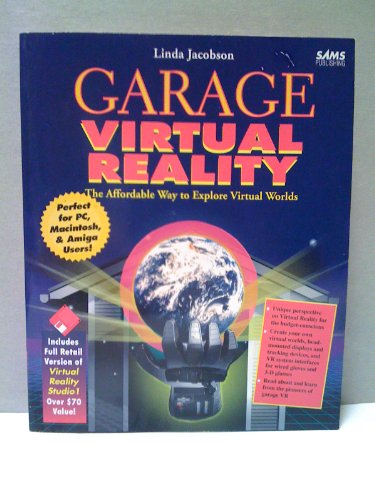
'95.
Yep. I do remember.
My bible back then.
[edit] Still in my bookshelf.


The closer things are the bigger the difference it makes. I've already established that it changes the origin of your view by a few millimetres (I don't know how many; perhaps the whole radius of an eyeball), and what I wonder about is if all of these tight geometric calculations aren't put off by the change.pogo wrote:I don't see how adjusting for the position of the lens within your eye will make much difference. You can only see detail straight ahead, stuff in your peripheral vision is too ill defined to be of much use. Our eyes are set up to ignore detail to the sides but detect movement, after which we can move our eyes, head or both to look directly at whatever has caught our eye, which of course the Rift supports.

This makes some sense. It makes no sense to cover the whole width and height of where your eyes can look by rotating in their sockets. Maybe half of that is too far to the left or right to be visible to both eyes, so when looking that way one screen would be inactive. Also you have to deal with curvature and distortion.gilesgoat wrote: - you have to learn to cope with "move your head not your eyes"
Id like to say I downloaded and played with Johnny Lee's exact demo there.gumboot wrote:Here's why I don't agree:Barney wrote:To be honest, I'd just like to have an immersive (ie, fills my field of view) stereo effect without any head tracking. That would be a great start imo, and head tracking could be worked on while people play with that.
I think stereo is more of a gimmick that falls out of being much, much easier to implement with recording devices. For rendered content on devices more expensive than cellophane and cardboard you really need to re-evaluate your priorities.

God I hope not.Somebody out there must be developing patents on the motions of AR/VR right? Like Apple owns the "pinch to zoom and rotate."


