The conductor might not have seen him until too late, and not have been in a position to get out of the way quickly. Standing that close to a moving train is probably illegal and certainly stupid. Bonus idiot points for doing it with headphones in so you don't hear warnings. But, hey, would have been a really cool selfie if you hadn't stood in the path of someone's boot.
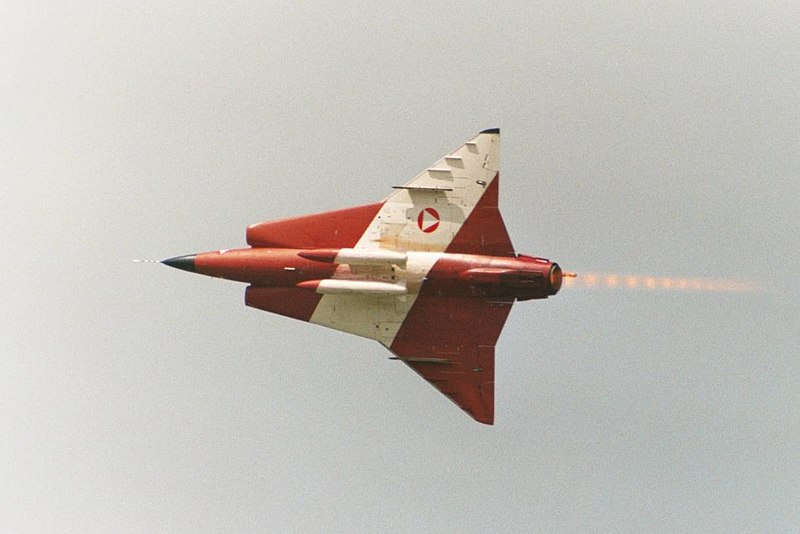
Swedish peoples are making the cool planes, for sure!
"I am a very considerate person. If I want to go out all night on my miniature golf course and shoot lizards, well, no reason to keep the neighbours awake..."
The conductor that did that deliberately is a maniac. He could have killed him.
I've seen a freeze frame of the video that shows the boot was placed ahead of a metal 'spike', without the boot he would be definitely dead - perhaps a case of the conductor doing the best they could to save his life?
ekendrick wrote:I've seen a freeze frame of the video that shows the boot was placed ahead of a metal 'spike', without the boot he would be definitely dead - perhaps a case of the conductor doing the best they could to save his life?
I simply don't see it. I see what look more like coding artefacts than anything. I really don't think there was anything there. And his leg swings back as the train progresses. Why's there room for that to happen if there's a spike in the way?
The simpler explanation is that, as all the hot dogs look the same and it's a repeating pattern, there are two equally valid interpretations of what you're seeing.
Either you're seeing all the hot dogs move slightly upwards, or you're seeing all the hot dogs move a further distance downwards.
Both of these could be true. There's nothing in the frames themselves that makes that distinction, so it's entirely down to your brain's perception. It'll have a tendency to prefer the hot dogs moving upwards because that's a shorter distance - not so much of a stretch and the least difference between frames - but you can convince yourself that the other interpretation is what's actually happening and then your brain switches to see that.
If this is one frame:
ABCABCABCABCABC
and the next frame is this:
CABCABCABCABCAB
Then you could either interpret it as that the "A"s have all moved forward by one character, or you could interpret it as that the "A"s have moved backwards by two characters. That is, that first "A" has either moved into the second position or it's wrapped right around and is second-from-last.
Both are equally valid interpretations and nothing in the data provided actually tells you which one is right. If you animated this, the brain would prefer the forward direction because that's the least difference between the frames - the simplest and most obvious interpretation - but there's really nothing to say that it isn't just going backwards at a faster pace, so if you think hard to convince your brain to see it this way, then it'll be able to see it going in the other direction.
(Note if you added more information - motion blur, one of the hot dogs being a different colour to the others, irregularly spaced and / or moving at different speeds, etc. - then that would give the brain concrete reasons to prefer the one interpretation over the other and you'd find it near impossible to convince yourself to see it going in the opposite direction.)
That's what's really going on. From the frames themselves, there simply isn't any way to discern the difference between hot dogs going out slowly or hot dogs going in quickly. Both of these things could potentially be happening frame-wise.
Just like there's no real way to tell if those "ABCABCABC"s above are all moving forward one character and wrapping around, or if they are all moving backwards two characters and wrapping around. The end results in either case look identical, frame-wise. There is no way to tell, so the brain can be convinced to interpret it either way, as they're equally valid.
It'll tend towards preferring the least difference - seems most likely - but that's not necessarily the right interpretation, so if you think about it hard enough, you can convince your brain that it could also be just as equally interpreted the other way around and then the brain will see that.
"Words ought to be a little wild - for they are assaults of thought on the unthinking."
- John Maynard Keynes