http://pluto.jhuapl.edu/news_center/news/20141113.phpNASA’s New Horizons spacecraft comes out of hibernation for the last time on Dec. 6. Between now and then, while the Pluto-bound probe enjoys three more weeks of electronic slumber, work on Earth is well under way to prepare the spacecraft for a six-month encounter with the dwarf planet that begins in January.


It's almost ridiculous how far digital cameras have advanced in the last ten years, back then even the state of the art (which these probably are) was poor compared to cheap stuff now.RedOktober wrote:A chap on the radio who works for the digital imaging supplier was saying that because of the mission timeframe, the digital camera technology is around 20 years old, despite the mission only just now coming to fruition.


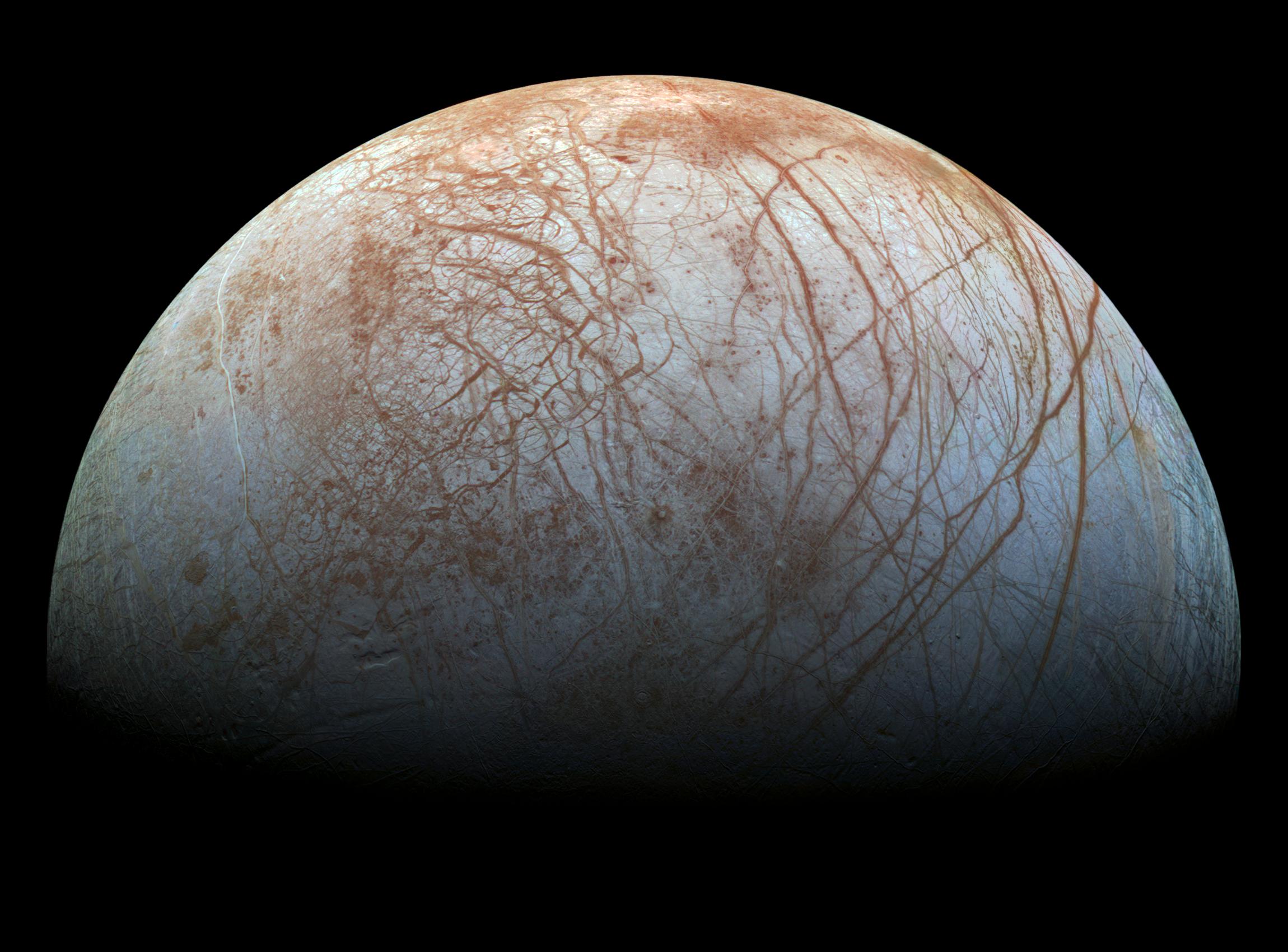
Probably it could, but it may be many months before we find out. The thing that strikes me looking at that is it's probably what you get when things form in the absence of gravity; almost all our rocks on earth are initially shaped by gravity. Whether its lava flows or sedimentary rocks they tend to form in horizontal layers, before being pushed around, cracked and weathered in ways we're familiar with.Darkflame wrote:To my completely untrained eye it kinda looks like two materials in this;
Around the top middle section, theres almost angular shaped rock that seems shiner. Could that be metal of some sort?
No. Wrong. The reason Mars has much less atmosphere than Earth is that its gravity is so low. That also applies to all the moons, and Pluto and Mercury.pogo wrote:One reason Mars is so barren is as it's so close to the Sun, and the solar wind has driven away whatever atmosphere it once had (our magnetic field and the Van Allen belt protect us from this).
Temperature and planetary mass. They interact.pogo wrote:That article first mentions the temperature as a main factor, which largely depends on distance from the Sun.
Not in its gaseous phase, they don't. Which is the phase it's in when it gets to the top of the atmosphere and escapes if it's fast enough.Water is the most obvious molecule affected by this, and other gasses can dissolve in water.
When the theory is denied it should be affirmed.But you don't need to appeal to theory.
The point is, Venus, like Earth, is massive enough to have an atmosphere at a high enough temperature to keep water from freezing. The only things wrong with Venus from an earthlife point of view are lack of water and too much heat. These are soluble in the next few hundred years, with the technology we have now.Mars and the Moon (and Mercury) are barren and dry rocks. Venus has an atmosphere but an entirely inhospitable one.
Liquid water? Europa maybe, the rest it's more like liquid methane. That is pretty cold. Bear in mind that we need water, but we can't live in it.The outer planets are gas giants to impossible to land on or even get too close to. But the moons of Jupiter and Saturn look very habitable and liveable, with solid surfaces, some liquid water, and energy.
That's interesting, but not really that useful for building bases. For a start it takes ages to get there. Then there's no breathable air, and you have to dig for water unless you find a volcano spewing it, and that won't be safe for collection.pogo wrote:Ganymede has water:
https://en.wikipedia.org/wiki/Ganymede_ ... ace_oceans
And Callisto is thought to have some:
https://en.wikipedia.org/wiki/Callisto_ ... _structure
They're still icy cold. Cold can kill on Earth, that's much colder and more dangerous. The moon is close astronomically speaking, and it's more or less at the temperature we're used to (on average, there are clearly very cold bits, and it probably gets quite hot with all the direct sunlight).That (with Europa) is three of the four large moons around Jupiter. And those are the four we've spent most time surveying: who knows which others of Jupiter's and Saturn's moons will have water?