
A blackout across London was narrowly avoided :
https://www.bloomberg.com/opinion/artic ... premium-uk
I believe it is political, these are problems exacerbated by underinvestment in the network and privatisation.
Politics Thread!
Re: Politics Thread!
Trippy vibes...
http://soundcloud.com/two-gapper
http://soundcloud.com/two-gapper
-
Harlequin

- Baaaaaaa!

- Posts: 6505
- Joined: Wed Jun 05, 2002 4:19 am 0
- Location: London, directly above the centre of the Earth.
Re: Politics Thread!
merman wrote:Totally agree with Starmer’s description of Sunak and Truss performing “Thatcherite cosplay”.
Even the blouse Liz was wearing the other day looked like something Maggie wore.

Emoticon and contraction free since... quite a while ago.


Re: Politics Thread!
She's had her hair dyed to match Thatcher's, as well.
Re: Politics Thread!
The word 'Gormless' was invented for her.
She will be particularly inept at PMQ.
She will be particularly inept at PMQ.
Trippy vibes...
http://soundcloud.com/two-gapper
http://soundcloud.com/two-gapper
-
merman

- Sheepie Whore

- Posts: 10943
- Joined: Wed Feb 16, 2005 1:44 pm 0
- XBL Gamertag: merman1974
- Yahoo Messenger: andrewrfisher
- Location: Skegness, England
- Contact:
Re: Politics Thread!
Narrowly avoided by buying in energy from Belgium, at the highest price the UK has ever paid for electricity on the European market.(o)(o) wrote:A blackout across London was narrowly avoided :
https://www.bloomberg.com/opinion/artic ... premium-uk
I believe it is political, these are problems exacerbated by underinvestment in the network and privatisation.
And yes, very much due to the lack of investment post-privatisation.
Twitter, Xbox, Wii U and Steam - merman1974
ZZAP is back - https://www.patreon.com/zzapmagazine
ZZAP is back - https://www.patreon.com/zzapmagazine


Re: Politics Thread!
I've mentioned this before, but the fatal flaw in privatisation is exactly that there's an implicit "moral hazard" for infrastructure investment.
Energy is privatised. The government's only role should be regulation. So it should be these private companies investing in new power stations.
But here's the "moral hazard". Don't do anything. Not a sodding thing. Let the infrastructure slowly collapse.
And then, at the last minute, when the lights are about to go out... the government rushes in with taxpayer money to save you. George Osborne comes on the TV to act as a "knight in shining armour" that he's "keeping the lights on" by wasting absolutely ridiculous sums of money on Hinkley Point C.
Do absolutely nothing. Invest not a cent in infrastructure improvement, new power stations nor transition to energy storage or renewables.
Because then it's your own money at risk. Just wait. Bide your time. Wait for things to get unacceptably bad. Because there's no possible way that any government - who wants to stand any chance of winning the next election - can just stand there and let the lights go out. The life support machines just turn off. All the refrigerated food to be allowed to rot. For the economic damage of many, many businesses being forced to shut up shop and for all remote work to just stop.
They can't just stand there. Energy companies are "too big to fail". They have to bail you out, no matter how horridly neglectful you get.
Logically, if your aim is to "maximise profits" - which it is for all these companies - then you should do absolutely nothing to improve the infrastructure. Let it go to shit, and then the taxpayer pays for it all and takes the risk. Then you just profit from the free public investment thereafter.
This is an implicit problem with the very concept of privatisation of public services.
Because if we look over to, say, rail privatisation then we saw exactly the same thing. Originally, we had Railtrack. Commercial companies privately owning the nation's railway infrastructure.
But they repeatedly defied the regulator's requests for improvements. Like, they just told the regulator to fuck off and carried on doing nothing.
Until we had the Southall rail crash in 1997 (7 died and 139 were injured). Then we had the Hatfield rail crash in 2000 - four were killed and more than 70 injured.
And the infrastructure neglect was getting worse, and people were dying. So Railtrack was shut down and Network Rail took over.
The "moral hazard" rears its ugly head again. Do nothing and actively let the infrastructure fall apart - to the point where it started killing people - and then the government will be forced to step in and then re-nationalise all the super-expensive risky stuff. The infrastructure. While the private train companies get to continue enjoying the profits of selling extortionate train tickets.
Privatise the profits, nationalise the risks and the costs.
And we can look to telecommunications, which was also privatised. And we see governments boasting about investing millions and billions into "rural broadband" and "super-fast broadband".
So, you know, if you're BT then don't be a mug. Don't actually waste your own money running a single broadband cable out into rural areas - at great expense - but rather just sit back, do nothing and wait for the government to start throwing free cash at you to do your job. It's in your interests to let broadband speeds fall behind other countries - because, as the UK tumbles down the international broadband speed league tables, and even poor developing countries start making our Internet look slow and shite, here comes the government with free money, committed to paying you to do your job of bringing all that "super-fast broadband" to all the country, including rural areas.
Privatisation implicitly brings this "moral hazard". Indeed, it encourages it. Because if you're running BT for your shareholders, then you absolutely should not do much of anything to improve the infrastructure. Gambling billions of your own profits on expensive infrastructure improvements? Absolutely not. Just wait. Be patient. The government will be forced to come running with taxpayer money, if you just let the infrastructure rot away badly enough that it becomes intolerable.
Every time they've privatised, this is what's happened. Again and again, without fail. The "moral hazard" here is fundamental and implicit in the whole concept.
p.s. Nuclear fission can't save us from climate change. Simply because the average time it takes to build a nuclear power station - from design, to permit, to actually turning it on - is about 15 to 20 years. To meet our climate commitments, we've got to halve carbon emissions by 2030 - which is 8 years away - and we have to be "net zero" by 2050. So, sorry, nuclear can't do it. There's just not enough time.
Energy is privatised. The government's only role should be regulation. So it should be these private companies investing in new power stations.
But here's the "moral hazard". Don't do anything. Not a sodding thing. Let the infrastructure slowly collapse.
And then, at the last minute, when the lights are about to go out... the government rushes in with taxpayer money to save you. George Osborne comes on the TV to act as a "knight in shining armour" that he's "keeping the lights on" by wasting absolutely ridiculous sums of money on Hinkley Point C.
Do absolutely nothing. Invest not a cent in infrastructure improvement, new power stations nor transition to energy storage or renewables.
Because then it's your own money at risk. Just wait. Bide your time. Wait for things to get unacceptably bad. Because there's no possible way that any government - who wants to stand any chance of winning the next election - can just stand there and let the lights go out. The life support machines just turn off. All the refrigerated food to be allowed to rot. For the economic damage of many, many businesses being forced to shut up shop and for all remote work to just stop.
They can't just stand there. Energy companies are "too big to fail". They have to bail you out, no matter how horridly neglectful you get.
Logically, if your aim is to "maximise profits" - which it is for all these companies - then you should do absolutely nothing to improve the infrastructure. Let it go to shit, and then the taxpayer pays for it all and takes the risk. Then you just profit from the free public investment thereafter.
This is an implicit problem with the very concept of privatisation of public services.
Because if we look over to, say, rail privatisation then we saw exactly the same thing. Originally, we had Railtrack. Commercial companies privately owning the nation's railway infrastructure.
But they repeatedly defied the regulator's requests for improvements. Like, they just told the regulator to fuck off and carried on doing nothing.
Until we had the Southall rail crash in 1997 (7 died and 139 were injured). Then we had the Hatfield rail crash in 2000 - four were killed and more than 70 injured.
And the infrastructure neglect was getting worse, and people were dying. So Railtrack was shut down and Network Rail took over.
So, truth is, the rail infrastructure has been re-nationalised already. I mean, they can say it's "arm's length" all they like. The point is that, in the end, the taxpayer owns and pays for it all.Wikipedia wrote:Network Rail is an "arm's length" public body of the Department for Transport with no shareholders, which reinvests its income in the railways.
The "moral hazard" rears its ugly head again. Do nothing and actively let the infrastructure fall apart - to the point where it started killing people - and then the government will be forced to step in and then re-nationalise all the super-expensive risky stuff. The infrastructure. While the private train companies get to continue enjoying the profits of selling extortionate train tickets.
Privatise the profits, nationalise the risks and the costs.
And we can look to telecommunications, which was also privatised. And we see governments boasting about investing millions and billions into "rural broadband" and "super-fast broadband".
So, you know, if you're BT then don't be a mug. Don't actually waste your own money running a single broadband cable out into rural areas - at great expense - but rather just sit back, do nothing and wait for the government to start throwing free cash at you to do your job. It's in your interests to let broadband speeds fall behind other countries - because, as the UK tumbles down the international broadband speed league tables, and even poor developing countries start making our Internet look slow and shite, here comes the government with free money, committed to paying you to do your job of bringing all that "super-fast broadband" to all the country, including rural areas.
Privatisation implicitly brings this "moral hazard". Indeed, it encourages it. Because if you're running BT for your shareholders, then you absolutely should not do much of anything to improve the infrastructure. Gambling billions of your own profits on expensive infrastructure improvements? Absolutely not. Just wait. Be patient. The government will be forced to come running with taxpayer money, if you just let the infrastructure rot away badly enough that it becomes intolerable.
Every time they've privatised, this is what's happened. Again and again, without fail. The "moral hazard" here is fundamental and implicit in the whole concept.
p.s. Nuclear fission can't save us from climate change. Simply because the average time it takes to build a nuclear power station - from design, to permit, to actually turning it on - is about 15 to 20 years. To meet our climate commitments, we've got to halve carbon emissions by 2030 - which is 8 years away - and we have to be "net zero" by 2050. So, sorry, nuclear can't do it. There's just not enough time.
"Words ought to be a little wild - for they are assaults of thought on the unthinking."
- John Maynard Keynes
- John Maynard Keynes
-
gilesgoat

- Sheepie Whore
- Posts: 27259
- Joined: Wed Sep 03, 2003 7:54 am 0
- Location: Monfalcone, Italy
- Contact:
Re: Politics Thread!
See the kind of "crap" we are having in Italy .. I present you the "National Youngs" and their meeting in Florence called "Fortress" where apparently they were chanting songs about Priebke , giving lessons "againist the weak male" ( i.e. lessons about "male superiority and how to be a real male" ) and how "the enemy" are the "gender (bending) people" and "the migrants" ..
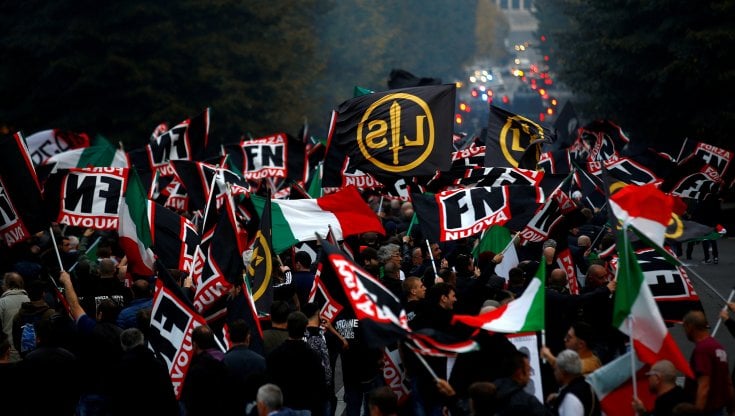
And the sad part is "the big fear" they may get the mayority votes at next elections ..
"The other funny choice" is this one, you'll recognize one of them to the left .. the other man to the right is Salvini the leader of "League" ( a sort of BNP ) .. it's a mess ... "that's the ones we have to make a choice and vote for" ... ( actually is more likely than "among the least worse" Berlusconi could win again, but probably not alone he'll do a "coalition" with "League" probably ) ...
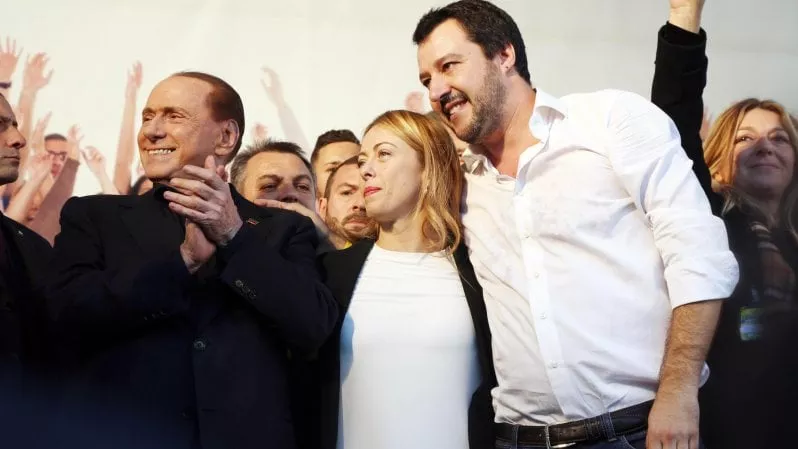
Ah Italy .. "the Bel Paese" ..

And the sad part is "the big fear" they may get the mayority votes at next elections ..
"The other funny choice" is this one, you'll recognize one of them to the left .. the other man to the right is Salvini the leader of "League" ( a sort of BNP ) .. it's a mess ... "that's the ones we have to make a choice and vote for" ... ( actually is more likely than "among the least worse" Berlusconi could win again, but probably not alone he'll do a "coalition" with "League" probably ) ...
Ah Italy .. "the Bel Paese" ..
Giles the billy goat
"Baa"
"Baa"


Re: Politics Thread!
See, this is what pisses me off about our current energy policy.KlaxonCow wrote:p.s. Nuclear fission can't save us from climate change. Simply because the average time it takes to build a nuclear power station - from design, to permit, to actually turning it on - is about 15 to 20 years. To meet our climate commitments, we've got to halve carbon emissions by 2030 - which is 8 years away - and we have to be "net zero" by 2050. So, sorry, nuclear can't do it. There's just not enough time.
I used to work at Berkeley Nuclear labs; only as an AV Tech, but I got to sit in on high-level video conferences and company meetings.
Nukes take about 20 years to build. They operate for ~50 years, then you have to spend a biblical amount of money on decommissioning. And finally, you have to maintain a security and safety presence on site for the next however many centuries.
And that's not to mention that our waste-handling tech still effectively amounts to "Brushing it under the carpet", either through vitrification (coating the waste in glass and moving it to the caverns under Sellafield), or handing it off to other countries (usually Japan, and for even more money).
Nuclear is NEVER profitable.
Not in the short-term; not in the mid-term; not in the long-term.
Oh, and your point about bail-out?
Yeah, in the nuclear industry, that's been going on since at least the mid-Nineties, when BNFL / Westinghouse realised they didn't have the cash to properly decommission sites, so went back to the government cap-in-hand, the end result of which was "PPP", Public Private Partnership, where the taxpayer ended up bailing them out.
Nukes are a fucking stupid idea.
Admittedly, a lot of excellent scientific tech came out of them, but not enough to offset the cost, both financial and environmental.

Re: Politics Thread!
I flip-flopped twice on nuclear power. First in the late 80s / early 90s when it was clear isotropic transformation was never going to work, let alone be done, and when I concluded that the implicit subsidy in terms of nuclear power not having to allow for the potential cost of an accident was ludicrous. Then I flipped back to thinking it might be viable again in the early 2000s when I decided that nuclear power was better than climate change, even at its eye-watering cost.
(Which led to a hilarious argument with the interesting but flawed Lewis Page at The Register shortly after Fukushima. He's pro-nuclear, a libertarian capitalist, and also at the time a climate change denier. He was arguing Fukushima was a success in that nobody died, and I was pointing out the economic disaster and argued that the only reason for nuclear was to combat climate change. When he objected to both sides of that I pointed out that the capitalist solution to the nuclear power accident question was to require them to carry insurance against the full costs of any accident so the market can accurately price their product. That one he didn't reply to, not much to my surprise).
I haven't yet changed my view, which is that as someone who thinks climate change is really fucking important there probably still is a place for nuclear because (even with the limitations on how fast it can be brought online and its huge cost) it can still be a portion of the solution to the problem. The baseload supply question is not going to go away - it will be particularly critical in the late 2030s and 2040s as we put more and more of our power capacity onto unreliable sources and as more of the existing reactors reach EOL. At the very least, replacing existing nuclear seems to me very close to a requirement, and a modest increase would not be unreasonable.
It may be expensive and in many ways not that great, but we know it works. Which, in the field of preventing climate change, is an advantage very many essential areas do not yet have. But it is one component, and not the highest priority one.
-
merman
- Sheepie Whore
- Posts: 10943
- Joined: Wed Feb 16, 2005 1:44 pm 0
- XBL Gamertag: merman1974
- Yahoo Messenger: andrewrfisher
- Location: Skegness, England
- Contact:
Re: Politics Thread!
There is a case for the new generation of smaller nuclear reactors, and indeed the Government was evaluating sites for them. And then did another screeching U-turn to approve an old fashioned PWR reactor at Sizewell C (a site that is still spectacularly unsuited to nuclear power, let alone three huge sites filled with hazardous material).
The money spent on that could insulate every home in the country properly, or put solar panels on every house. Even spending it on passive solar heating for water would be better in the long term than another reactor.
The money spent on that could insulate every home in the country properly, or put solar panels on every house. Even spending it on passive solar heating for water would be better in the long term than another reactor.
Twitter, Xbox, Wii U and Steam - merman1974
ZZAP is back - https://www.patreon.com/zzapmagazine
ZZAP is back - https://www.patreon.com/zzapmagazine
-
gilesgoat
- Sheepie Whore
- Posts: 27259
- Joined: Wed Sep 03, 2003 7:54 am 0
- Location: Monfalcone, Italy
- Contact:
Re: Politics Thread!
There's an interesting bit of story here about Italy and nuclear : https://world-nuclear.org/information-l ... italy.aspxMat wrote:See, this is what pisses me off about our current energy policy.KlaxonCow wrote:p.s. Nuclear fission can't save us from climate change. Simply because the average time it takes to build a nuclear power station - from design, to permit, to actually turning it on - is about 15 to 20 years. To meet our climate commitments, we've got to halve carbon emissions by 2030 - which is 8 years away - and we have to be "net zero" by 2050. So, sorry, nuclear can't do it. There's just not enough time.
I used to work at Berkeley Nuclear labs; only as an AV Tech, but I got to sit in on high-level video conferences and company meetings.
Nukes take about 20 years to build. They operate for ~50 years, then you have to spend a biblical amount of money on decommissioning. And finally, you have to maintain a security and safety presence on site for the next however many centuries.
And that's not to mention that our waste-handling tech still effectively amounts to "Brushing it under the carpet", either through vitrification (coating the waste in glass and moving it to the caverns under Sellafield), or handing it off to other countries (usually Japan, and for even more money).
Nuclear is NEVER profitable.
Not in the short-term; not in the mid-term; not in the long-term.
Oh, and your point about bail-out?
Yeah, in the nuclear industry, that's been going on since at least the mid-Nineties, when BNFL / Westinghouse realised they didn't have the cash to properly decommission sites, so went back to the government cap-in-hand, the end result of which was "PPP", Public Private Partnership, where the taxpayer ended up bailing them out.
Nukes are a fucking stupid idea.
Admittedly, a lot of excellent scientific tech came out of them, but not enough to offset the cost, both financial and environmental.
But fundamentally turns out something already told me once, that in Italy we are paying quite an amount of taxes on electricity cause quite a part goes in costs, still "biblical" , for the decommissioning of some nuclear power stations ( 4 it seems ) that did happen in 1990 ..
So sounds a bit like "open a mortgage for a super expensive car, smash the car, but you still have the mortgage to keep paying on it" ..
Also I always asked myself "how much efficient OVERALL nuclear is" .. "ok works to create energy for NOW" BUT :
- how much really costs to procure/buy the fuel you need and WHO is actually making it ?
- what countries are you going to beg to have nuclear fuel ? (*)
- then yes decommissioning as you say, nuclear waste, how much it really costs to deal with it
Overall "once you sum ALL the costs for ALL the time" vs "the time you produced/sold that energy" .. are you at least "par" ? It seems to me "you are NEVER par but ALWAYS at loss" ..
(*) asking myself also "what are the political implications ?" .. if it turns out a thing like "actually only Russia and China can do it ?" ..
Who are the producers of reactor fuel in the world ?
Giles the billy goat
"Baa"
"Baa"
-
zip accident

- Sheepie Whore
- Posts: 13928
- Joined: Sun Feb 20, 2005 1:58 pm 0
- Location: Bristol, UK
Re: Politics Thread!
Fuel really isn't a significant problem with nuclear. Fast breeders are sort of bad, but they work. So if you have some old fuel, you can make about 100 times more. The depleted uranium that the USA fires as anti-tank weapons is potential fuel that they are choosing not to use as fuel.gilesgoat wrote: - how much really costs to procure/buy the fuel you need and WHO is actually making it ?
Who are the producers of reactor fuel in the world ?
The real problems, as others have detailed above, are the huge costs of the buildings and machines, and the need to decomission after the end of life, which (decomissioning) nobody is really doing yet.
"My way is the way of not fighting":- the book of Enter the Dragon.

Re: Politics Thread!
On this corner of Europe some companies profits were released today. The oil company and supermarket chains are doing really well with record profits since the war, the crisis, and the inflation came around.
-
zip accident
- Sheepie Whore
- Posts: 13928
- Joined: Sun Feb 20, 2005 1:58 pm 0
- Location: Bristol, UK
Re: Politics Thread!
I told everyone that the shops were being greedy about the price increases.PFVA wrote:On this corner of Europe some companies profits were released today. The oil company and supermarket chains are doing really well with record profits since the war, the crisis, and the inflation came around.
"My way is the way of not fighting":- the book of Enter the Dragon.
Re: Politics Thread!
So far I'm unconvinced by the argument for SMR's. There's going to be a lot more radioactive material, a lot more radioactive sites to decommission, a far greater security risk, I'm very unsure whether a smaller reactor inherently leads to less frequent and smaller accidents, and there's zero evidence they'll be any cheaper. Certainly they can be built more quickly, though.merman wrote:There is a case for the new generation of smaller nuclear reactors, and indeed the Government was evaluating sites for them. And then did another screeching U-turn to approve an old fashioned PWR reactor at Sizewell C (a site that is still spectacularly unsuited to nuclear power, let alone three huge sites filled with hazardous material).
The money spent on that could insulate every home in the country properly, or put solar panels on every house. Even spending it on passive solar heating for water would be better in the long term than another reactor.
Again, I'm not saying I think this is a good solution, just that if you believe climate change is a real problem, it's one that might be necessary even if we do all those other things that clearly need doing.