

Never got that. Why not release a brickwalled, compressed-to-death single version to radio, streaming, and everyone else without any functional hearing, and put a properly mastered version on the albums, that are becoming a niche music-lover thing anyway....KlaxonCow wrote:Nothing has had any dynamic range since the 2000s anyway. It's all got to be cranked to full, all the time, for the radio play, to compete with the overly loud advertising.
Pink Floyd ....
Re: Pink Floyd ....


Re: Pink Floyd ....
I guess it's just because that involves paying someone to make two mixes, instead of one. And it's all about the money for the record label.skab wrote:Never got that. Why not release a brickwalled, compressed-to-death single version to radio, streaming, and everyone else without any functional hearing, and put a properly mastered version on the albums, that are becoming a niche music-lover thing anyway....
I mean, there should really be a standard defined in audio. That everything is normalised to however many dB. Like, dB is both a relative and absolute scale - you can perfectly precisely define absolute loudness - and also relative loudness, because folks get to control their own volume knobs.
And there should be a simple thing where, as an industry standard, everything is normalised within a specified range.
You don't just accept any old crap and play it, but when it's loaded into memory - because, come on, all this stuff is digital now, so songs are loaded into RAM somewhere, ready for playback - then the machine runs rapidly through it, looks for the peak of peaks, and then normalises the whole thing to the standard dB setting. If you try to go louder, then all you're doing is compressing it, as everything is normalised to the same level.
Adverts as well, of course. Because they're the real bastard that kicked this all off.
Because watching TV has become ridiculous. If you're watching something that takes itself very seriously - Walking Dead, Game of Thrones, latest Scandiwegan cop show, etc. - then they'll insist on whispering all the dialogue throughout, for added "drama". So you put the volume up, as the characters are all whispering dramatically to each other.
Then the ad break comes on, and some bastard is shouting at you at maximum volume to buy useless tat. Fuckin' 'ell. So you turn the volume back down, then the show returns and everyone's whispering once more. Back to the volume dial, so you can actually hear something.
Up, down, up, down. As I say, the TV companies should just invest in video players that automatically do volume normalising. Run through the next 15 minutes of audio rapidly - it's all in RAM, as everything's digital these days - and find the peak of peaks, then scale everything to that. Normalise it.
And, like, every audio engineer knows that they'll be normalised to a set dB level. Work with it, or end up sounding like crap. Because, thanks to the normalisation, what you can't ever do is be louder than anything else.
It's bizarre, really, that the audio industry never did specify proper standards for this crap. It can all be precisely measured, so there's really no technical reason not to do so, and it would have stopped this "Loudness War" nonsense.
Indeed, I'd be tempted to not just scale it to the max - so you can't be louder than anyone else - but also find the trough of troughs and scale that down.
So if you want to compress like fuck, then it'll just get stretch to shit. It won't be louder, it'll just be lower resolution and sound worse.
But, yeah, in a world where logic, rather than the love of money, ruled, that's exactly how it'd work. Crap "radio mix" that's compressed to shit on the radio, but the actual real song, properly mastered, on the album and single which you pay money for.
Or, as I say, all audio players are just adapted to normalise to a standard volume. Then you can't cheat, and will have to actually do a good job of the audio instead, if you want to stand out.
You get this on YouTube as well. Some folks have super quiet microphones and you can barely hear them. Then you switch to another video, and it's blasting out.
Now, in fairness, it's a bit more acceptable on YouTube, in that you're not dealing with professional audio engineers. These are often just folks at home, often with a gaming headset or something.
But there's really fuck all excuse that professional radio, TV and movies don't do this.
And the point is that YouTube has to re-encode every single video that's uploaded anyway. That's partly because they re-encode it into all the different video qualities, so that the server has the file to stream in every quality.
But it's also partly security - the cardinal rule with the Internet - NEVER serve a user-uploaded file. When you ingest anything from the Internet - video, audio or images - then have the server re-encode it. So that if someone tries to upload a GIF with a virus inside it or something, then that shit will get stripped out, as you've run it through your own re-encoder and uncompressed / re-compressed it, so an external user can't control what exact bytes get delivered to other users.
But, yeah, YouTube re-encodes every file uploaded to it anyway, so just include audio normalisation in the re-encode. Bring all videos to roughly the same dB level. And, you know, it'll also be consistent doing this - so folks will learn exactly where their volume dials should be, where their recording levels on their mics should be, etc. to always get the same "best" result.
You're right.
But I'd go even further, and define a max dB level to which everything is always normalised across the board. An industry standard, a built-in normaliser on every single player. To make it that you can't cheat your way to sounding louder. Tackle the problem in the right place - this should have always been the case from year dot anyway.
"Words ought to be a little wild - for they are assaults of thought on the unthinking."
- John Maynard Keynes
- John Maynard Keynes
-
WiteWulf

- Sheepie Whore

- Posts: 10125
- Joined: Mon Aug 23, 2004 11:20 am 0
- PSN: WiteWulf
- Location: Loughborough(ish)
Re: Pink Floyd ....
I'm gonna take Skab's last point first:
It takes next to no effort to provide a brick-wall mastered version of a track. That's partly why it's so despised by audiophiles: there's no art of subtlety to it and it can be done in seconds with the normaliser plugin on any DAW. That said, it's not necessary to do this for radio stations. Back in the days of AM and FM broadcast you had a far more limited dynamic range available due the available bandwidth of an AM or FM station. As such, every station had a compressor in the broadcast audio chain to ensure the audio wasn't clipped or too quiet. But as an aside, it's quite normal now to see heavily compressed (dynamic range, not data) versions of music appear on CD (remember those?) and streaming services, with a much more dynamic mix appearing on the vinyl release. Personally, this really pisses me off. I listen exclusively to digital music, but this doesn't stop me from appreciating a good, expansive and airy mix on my headphones. High-quality vinyl rips often sound significantly better than the official high res digital versions.
KlaxonCow:
You're wrong, so very very wrong. The dynamic range of a track or album should be part of the stylistic creative process that the musicians, producer and mastering engineer undergo. You cannot implement an industry standard output level for music and enforce it on every recorded music. There's already a technical upper limit built in to the 16-bit audio format, but an artist should be allowed to decide the dynamic range of their work within that restraint, otherwise everything will be brickwalled.
If an artist wants to make the creative decision to brick wall master their work, let them. But if another wants greater subtlety and range, also let them. You can't standardise art.
:::G:::
PSN: WiteWulf
Switch: SW-3941-2878-7584
Steam: WITEWULF66
PSN: WiteWulf
Switch: SW-3941-2878-7584
Steam: WITEWULF66
Re: Pink Floyd ....
Concert pitch is 440Hz - also known as standard tuning. A semitone interval is the twelfth root of two. Equal Temperament. Major minor minor Major Major minor diminished. Ionian, Dorian, Phrygian, Lydian, Mixolydian, Aeolion, Locrian. Standard notation.WiteWulf wrote:You can't standardise art.
The golden ratio and geometric forms used in the Renaissance. Kandinsky's theories of form. Itten's colour theory. Complementary colours, triadic colours, tetradic colours, etc.. Pantone colours - that standard actually costs a lot of money.
Rhyming couplets. Iambic pentameter. Haiku. And just grammar and spelling in general.
I know this argument. The '60s "hippy" vibe that you don't let "the man" tell you what to do, and you must be free to "be creative" without the oppression of the rules, dude. Everyone gets a gold star for their pasta collages on the fridge door, as who are you to judge something as right or wrong? Renaming "failure" to "deferred success", as an educational policy. But - logically - if everyone has a qualification, then no-one is, in fact, qualified.
It's wrong. Because it's a failure to recognise that it's not "the man" telling you what to do, it's reality itself. "The man" - your teacher - is just the messenger.
Art exists within reality and has physical forms that must sit within physical limits, and have natural relationships to that which is surrounding them - physical things must be located in spacetime, and ultimately obeys those mathematical laws of physics.
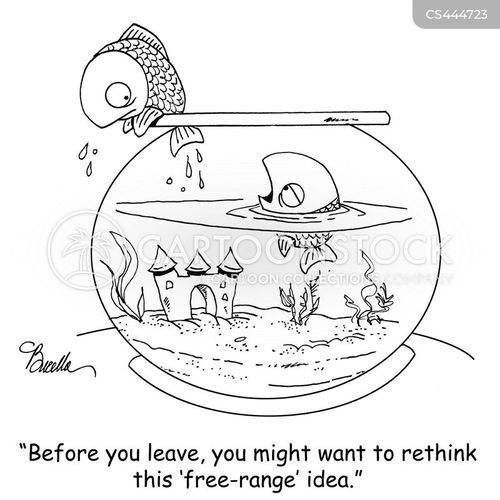
You might think that smashing the goldfish bowl would "set you free", but it actually does pretty much the polar opposite.
Acknowledged as one of the most influential pieces of art from arguably "the greatest artist":

And it's because he constrained himself to the hard mathematical laws of perspective, while everyone else felt "free" to ignore reality.
Sorry, I'm Bauhausian in artistic philosophy. "Freedom" is not creativity. It might be persistent, but it's a common misidentification. That ain't really how it works. Not at all.
"Words ought to be a little wild - for they are assaults of thought on the unthinking."
- John Maynard Keynes
- John Maynard Keynes
-
Little stoned kiwi

- Baaaaaa!

- Posts: 4597
- Joined: Mon Oct 27, 2003 6:05 am 0
- Location: Christchurch
Re: Pink Floyd ....
Before marking music as set tones to a set beat, critiqued by gatekeepers, music was something everyone enjoyed feeling a part of.KlaxonCow wrote:Concert pitch is 440Hz - also known as standard tuning. A semitone interval is the twelfth root of two. Equal Temperament. Major minor minor Major Major minor diminished. Ionian, Dorian, Phrygian, Lydian, Mixolydian, Aeolion, Locrian. Standard notation.
If they think you're crude, go technical; if they think you're technical, go crude. I'm a very technical boy.
Re: Pink Floyd ....
But that's exactly what "concert pitch" solves.Little stoned kiwi wrote:Before marking music as set tones to a set beat, critiqued by gatekeepers, music was something everyone enjoyed feeling a part of.
I can play away on my guitar, on my lonesome, and it doesn't matter what its absolute tuning might be, so long as I've done a quick "relative tune" to the strings.
But if I want to join you, playing on your piano, the fact that our absolute tunings are almost certainly out, will grate and sound discordant.
(And that thing about tuning: in terms of discord, then being wildly out is often better than being fractionally out. 33Hz and 34Hz - a 1Hz difference - have got a long way to go before they find a common multiple, while 33Hz and 39Hz have at least got 3Hz sub-harmonic thing going on there. With tuning, if you go far enough out, then you start coming back in again.)
So if I pull out an electronic tuner, to ensure it's not just relatively tuned, but actually proper "440Hz concert pitch" - and your piano tuner did much the same with your instrument as well - then I can pull out my guitar and accompany your piano playing, no problem. Indeed, if everyone does this - as a universal standard - then we don't have to worry about tuning at all.
It's called "concert pitch" because it's for ensuring that the whole orchestra is on the same page for concerts. And if one guitar and piano de-tuned a little is such a headache, then the "network effect" of a whole orchestra playing together would be an un-tame-able beast without some kind of standard tuning (even if, playing an older classical piece, they got for a historic, rather than modern "equal", tuning).
Before the establishment of such standards, early music was often a lone instrument affair, or tending towards it. Maybe accompanied by a bit of simple percussion. Perhaps taking turns on leading the melody.
(Actually, this is a recreation for a modern ear and is more rich than the real thing ever would have been, honestly. It cheats from the strict "one instrument at a time" and harmonises in places, though at least it's trying to keep to the spirit of Medieval word, if not the letter, where you tended to avoid harmony like the Black Death, and rather it's more "a series of melodies", because of this "Grand Tuning Problem".)
Making music communal was the whole entire point of "concert pitch". And Equal Temperament helps make it more spontaneous - as you don't have to worry about constantly re-tuning your instruments for every key change. Imagine Eurovision where - wait a minute, bear with us - we just need 5 minutes, in the middle of the song, to completely re-tune the band, before hitting that uplifting "key change" for the chorus.
These standards absolutely did not kill communal participation, they furnished it. It's all about keeping folks on the same page. That was the whole bloody point.
It was pre-standard music that was all lone voices and monks sticking to basic diatonic harmonies, at most - which you can do, as the human voice isn't a fixed tuned instrument.
As standard notation allows you to cover your favourite song from the sheet music, for example.
If you bring down the walls of an intricate maze, then all you've actually got is just an empty field. If you smash the goldfish bowl - to seek your "freedom" - then you just drown in air. If a bunch of guitarists all bring their relatively tuned guitars to the party, it's going to sound god-awful.
(Anarchy is the one political system that has always failed in every known historical instance - it always collapses to needed laws, governments and regulations. Because, basically, while it's lovely in theory - at heart, I'm an anarchist - it's simply no actual way to run the world, in reality.)
If you know it's D Lydian, then you know what notes your band mates are going to play in advance for your improvisation alongside them.
The "freedom" of jazz musicians is absolutely 100% rooted in the fact that they know their musical theory.
It's the old wisdom: Before you can break the rules, you've got to know what the rules actually are.
Because, technically, if you don't know what the rules are, then you're not strictly "breaking the rules". You're just doing random shit that happens to violate rules that you know nothing about. It's really just flailing your arms about, making weird shit that no-one really likes much, but is often mistook for "being creative".
Last edited by KlaxonCow on Mon Feb 27, 2023 10:18 am 0, edited 1 time in total.
"Words ought to be a little wild - for they are assaults of thought on the unthinking."
- John Maynard Keynes
- John Maynard Keynes
-
Little stoned kiwi
- Baaaaaa!
- Posts: 4597
- Joined: Mon Oct 27, 2003 6:05 am 0
- Location: Christchurch
Re: Pink Floyd ....
Before 'A' was declared to be 440hz, music was limited to single instruments?
The fuck are you smoking?
The fuck are you smoking?
If they think you're crude, go technical; if they think you're technical, go crude. I'm a very technical boy.


Re: Pink Floyd ....
FWIW Netflix and Amazon have started a new "boost dialogue" option on some of their content. It's in the subtitles menu.
For all the talk of audio compression, I'm with WiteWulf - let the creator decide what they want to put out.
I do find it strange that the music industry complains of standardised compression lifting everything to the same volume constantly whilst the TV/movie industry seems to have the opposite problem (inaudible dialogue married with ear-splitting action scenes).
It's baffling to me that, unless you buy a full surround system, you can't adjust the audio mix manually. Most stuff is published with 5.1 or Atmos mixes. Which means the dialogue channel should be distinct and tweakable, whether you're using 9 speakers or just one. I know the voice data is in there somewhere, let me lift it to a level that's comfortable for me, the listener.
Basically I want a game audio menu with every iTunes release I buy. I always turn music off in games and would almost kill for the option to drop music from films/TV
Steam: SteelyDamn
-
phattslagg

- Baaaaaa!

- Posts: 3578
- Joined: Fri May 14, 2004 2:04 pm 0
- Location: Worcester, England
Re: Pink Floyd ....
The idea that standard concert tuning allows musicians to just start playing along is what gets me :facepalm:Little stoned kiwi wrote:Before 'A' was declared to be 440hz, music was limited to single instruments?
The fuck are you smoking?
Almost any situation involving more than one musician involves tuning beforehand - usually to the piano, because they take ages to tune, and require a trained professional. A standardised “concert” tuning has very little to do with convenience, and much more to do with instrument design.
Re: Pink Floyd ....
...who, of course, tunes it to concert pitch.phattslagg wrote:Almost any situation involving more than one musician involves tuning beforehand - usually to the piano, because they take ages to tune, and require a trained professional.
So you are, in effect, tuning to concert pitch and Equal Temperament, via the piano, as your "tuning fork".
"Words ought to be a little wild - for they are assaults of thought on the unthinking."
- John Maynard Keynes
- John Maynard Keynes
Re: Pink Floyd ....
Concert pitch existing doesn't mean everyone is going to tune to that. It's a starting point but if you turn up to a session and realise that the piano is out by a few cents then you can either retune the piano (or whatever lead instrument you're voicing around) or tune to fit in with the lead.KlaxonCow wrote:...who, of course, tunes it to concert pitch.phattslagg wrote:Almost any situation involving more than one musician involves tuning beforehand - usually to the piano, because they take ages to tune, and require a trained professional.
So you are, in effect, tuning to concert pitch and Equal Temperament, via the piano, as your "tuning fork".
Concert pitch defines a standard but doesn't mean that standard is going to be adhered to. Oasis tuned around 434 for Definitely Maybe. Steely Dan tuned between 430-450 for tracks on Can't Buy a Thrill. Symphony orchestras will often tune a little higher, to 443/444. Hipster and conspiracy types are tuning more toward 432.
Having a "standard" tuning declared gives everyone a starting point but it's still the case that folks need to tune to each other in every occurence.
Steam: SteelyDamn
-
phattslagg
- Baaaaaa!
- Posts: 3578
- Joined: Fri May 14, 2004 2:04 pm 0
- Location: Worcester, England
Re: Pink Floyd ....
KlaxonCow wrote:...who, of course, tunes it to concert pitch.phattslagg wrote:Almost any situation involving more than one musician involves tuning beforehand - usually to the piano, because they take ages to tune, and require a trained professional.
So you are, in effect, tuning to concert pitch and Equal Temperament, via the piano, as your "tuning fork".
Nope. Not always. There are orchestras who use other tunings - see Vienna Philharmonic, for instance, who use A=443Hz.
Besides, an orchestra is a relatively rare occurrence as far as ensemble go - probably 99.9% will be duos, or small bands, and a significant percentage of those will be using acoustic pianos that might well be tuned well to the left of 440.
When it comes to live music in particular, absolute tuning is pretty much irrelevant - it’s *relative* tuning that matters.
Re: Pink Floyd ....
Yes, it's a standard.Rhythm wrote:It's a starting point
That's what the word "standard" means. A starting point. A set of guidelines. A common vocabulary.
Folks really, really seem to be having a problem with me using the word "standard" here and interpreting it in all sorts of weird ways.
As if it means that, should you fail to comply, the thoughtpolice are going to come around, beat you up and arrest you. That if anyone violated a standard set of decibel guidelines - e.g. vocals should be -6dB, whsipering should be -12dB, etc. - then the universe would explode at the merest hint of anyone violating the guidelines!! Even though, you know, they're guidelines, not God's commandments chiselled into stone tablets, on penalty of a lightning bolt up your arse.
"Concert pitch" says the A below middle C is 440Hz.
That's the starting point. That's what the piano tuner will be aspiring to reach. If you've got an electronic tuner for your guitar, then that's what it'll report - that 440Hz is the A below middle C.
That's the standard. But if you show up and the piano's de-tuned a little. then you go with the piano, of course.
Because the whole entire point of the standard - as I mentioned - is about keeping everyone on the same page. So if you turn up and find that everyone's on a different page, then go with that instead, of course. The standard is not there to override reality, it's there to facilitate it.
For example, the English word "banana". We all know what it means, which means that we can talk about bananas. I mean, if you want to call a banana "a fibble-wibble" instead then you're at perfect liberty to, but don't be surprised that no-one knows what the fuck you're talking about.
This is how standards actually work. I can do anything I like. You can do anything you like. But when we interact, we need a common vocabulary to talk to each other and understand each other. That's what standards provide. That common vocabulary.
But if we agree that instead of using the word "banana", we're going to use the word "fibble-wibble" instead, then that's fine. We can deviate from the standard, and create our own "house rules". That's fine. The standard isn't there to stop you doing that - to send the thoughtpolice round, if you violate its set-in-stone "law" - but it's the shared common vocabulary. The starting point.
In Germany and a few other European countries, then B is called "H" and A# is called "B". So it's not C, C#, D, D#, E, F, F#, G, G#, A, A#, B but C, C#, D, D#, E, F, F#, G, G#, A, B, H. It's a different (historical) standard.
But they're only names. It works the same. The notes are the same. They're just calling a banana "a fibble-wibble" instead. But it is still just a banana.
And this is fine. As long as everyone knows we're using the "H" version of the note names, then everything's just fine and dandy. But, sure, if no-one's said anything, then people will typically assume the non-"H" standard.
And it is just a standard. Not a law. I mean, in naming the notes, I went with the sharp names. I could have equally said: C, Db, D, Eb, E, F, Gb, G, Ab, A, B. Sharp and flat notes have two names. Most people do like I do, and if there's no specific context that demands the flat names, you go with the sharps. But it's not wrong to call it by the flat name, as that's another valid name for the same note.
Basically, everyone's acting, in response to my suggestion of a standard, as if the word "standard" means you'll be arrested, dragged out into the streets and beaten to a pulp, if you dare violate the standard. No, no. That's not what "standard" means - or it ought never to be what it means.
It's a starting point. A common vocabulary. It's a device to get folks on the same page.
But, sure, if folks can get on the same page of their own accord - by talking - then feel free to disregard the standard.
My volume standard honestly would just be a list of agreed decibel ranges. Vocals should be in this range, whispering is this loud, shouting is this loud, etc.. And if you have a specific context to violate that, then violate it. Immediately, without hesitation.
It's not a law, on penalty of death, or anything. It's a starting point. In the absence of a specific context, where you need to deviate for specific good reasons, then master your vocals to this level. And because this is an industry standard, then everyone else should be - more or less, because, again, this is not a law, but just a standard starting point - doing much the same, so your audio will match up nicely with their audio, if played side-by-side. Your vocals are mastered around -6dB, say, and someone else's are mastered around -6dB - so when played one after the other, there's no volume jump. No-one has to dive to the volume dial, because the ad break has started shouting at them. Indeed, you'd generally not have to touch the volume dials much anymore. As things are generally in the right place - no, not "by law" or any such shit, but just by general consensus that it'd be nice to have things comparable to each other, so that things flow from one to the other seamlessly.
Just like tuning your instruments to be harmonious together. Yes, it's irrelevant what that actual specific tuning regime might be, as long as they work together.
This is the point of a standard. So that when your work meets someone else's work, it doesn't clash horribly.
I don't know. Where are the programmers at? They know what I mean.
The Internet is a standard. IP addresses look like this. Packets look like that. These are the HTTP verbs. HTML has this format.
The point of this is not to stifle your creativity. It just means that, when your server interacts with someone else's server, you get back what you expect. You can send any old shit over the wire, if you like. But other servers won't understand you, and so it won't actually do anything useful.
These standards are often deliberately loose. HTTP verbs can actually be anything you like. It's just a string. Send "FISHCAKES /" instead of "GET /", if you want. But the server you're querying, unless it knows what "FISHCAKES" is, is not going to respond as you expect. "400 Bad request".
But a server can totally, if it wants to, define a "FISHCAKES" method and if folks send "FISHCAKES /" to the server, it'll respond to that.
The HTTP verbs - "GET", "POST", "PUT", "DELETE", "HEAD", etc. - are a common vocabulary. You can totally deviate from it all you like - but you'll need agreement from the other end of the connection as to what "FISHCAKES" actually means to furnish a sensible conversation.
The names don't matter. What matters is that we all understand what the word "rose" refers to, by common agreement. In Welsh, the word is actually "rhosyn" (said like "ross - in"). That's fine. And now that you know what the Welsh word is - establishing that common agreement - I could talk about a "rhosyn" and now you know that means a rose.Shakespeare wrote:What's in a name? That which we call a rose, by any other word would smell as sweet.
The word itself is completely irrelevant. Its only purpose is to be a common vocabulary that keeps us on the same page.
People are reacting as if I said something mad. I really didn't. What's mad here is this interpretation of what the word "standard" means.
Yes, it's a starting point. A common vocabulary. Feel free to deviate from it, but that's the standard place to start. The standard set of assumptions. Absent a reason to think otherwise, then if I say "the A below middle C" then you can assume, by default, that I mean the frequency 440Hz. Maybe I don't, though. Maybe my piano is de-tuned a little and it actually means 443Hz.
In which case, yes, apply common sense and tune to the piano, because re-tuning a piano is an absolute nightmare - and typically requires a professional, with awesome "by ear" talents (you often find blind piano tuners, as they've honed their listening skills to max) - and will take forever, as every single note has its own independent string that needs to be separately tuned. A guitar has six strings, so that's way easier (also, with all those bends and pull-offs and such that the guitarist loves to do in their guitar solos, the thing is very likely already out of tune when you pick it up, rock guitars are re-tuned perpetually).
But, like, the piano tuner is going to be aiming for "A = 440Hz" - and that's what their tuning forks are all designed to ring out - when they tune it up. It'll deviate over time, though, as strings lose tension.
Also, as music is recorded these days, pitch differences can be for various "other reasons":
Like, you might record it at "A = 440Hz", but then, in the editing, you speed it up or slow it down.
Doesn't happen as much these days, though, as everything's digital and not on tape - so you can change key and tempo independently through software. But, that said, you can also still do faster / slower playback with digital audio too, of course, and someone might play around with that.
"Words ought to be a little wild - for they are assaults of thought on the unthinking."
- John Maynard Keynes
- John Maynard Keynes
-
zip accident

- Sheepie Whore
- Posts: 13928
- Joined: Sun Feb 20, 2005 1:58 pm 0
- Location: Bristol, UK
Re: Pink Floyd ....
You are defending two things, concert pitch and even temperament, it's the latter that seems to me to be getting the flak, it's new from about the time of Bach, it's great for people who hear exactly 12 notes per octave, but if you hear more (which blues players allegedly usually do) or less, then it's a bit shit.KlaxonCow wrote:Yes, it's a standard.Rhythm wrote:It's a starting point
That's what the word "standard" means. A starting point. A set of guidelines. A common vocabulary.
Folks really, really seem to be having a problem with me using the word "standard" here and interpreting it in all sorts of weird ways.
As if it means that, should you fail to comply, the thoughtpolice are going to come around, beat you up and arrest you. That if anyone violated a standard set of decibel guidelines - e.g. vocals should be -6dB, whsipering should be -12dB, etc. - then the universe would explode at the merest hint of anyone violating the guidelines!! Even though, you know, they're guidelines, not God's commandments chiselled into stone tablets, on penalty of a lightning bolt up your arse.
The frets on a guitar are to enforce even temperament, but there are no frets on a violin, cello or upright bass, there are sometimes fretless bass guitars."Concert pitch" says the A below middle C is 440Hz.
That's the starting point. That's what the piano tuner will be aspiring to reach. If you've got an electronic tuner for your guitar, then that's what it'll report - that 440Hz is the A below middle C.
That's the standard. But if you show up and the piano's de-tuned a little. then you go with the piano, of course.
Because the whole entire point of the standard - as I mentioned - is about keeping everyone on the same page. So if you turn up and find that everyone's on a different page, then go with that instead, of course. The standard is not there to override reality, it's there to facilitate it.
There are red and purple bananas, a lot of people wouldn't recognise them.For example, the English word "banana". We all know what it means, which means that we can talk about bananas. I mean, if you want to call a banana "a fibble-wibble" instead then you're at perfect liberty to, but don't be surprised that no-one knows what the fuck you're talking about.
You are again defending even temperament, which as you are noticing, not everybody likesThis is how standards actually work. I can do anything I like. You can do anything you like. But when we interact, we need a common vocabulary to talk to each other and understand each other. That's what standards provide. That common vocabulary.
But if we agree that instead of using the word "banana", we're going to use the word "fibble-wibble" instead, then that's fine. We can deviate from the standard, and create our own "house rules". That's fine. The standard isn't there to stop you doing that - to send the thoughtpolice round, if you violate its set-in-stone "law" - but it's the shared common vocabulary. The starting point.
In Germany and a few other European countries, then B is called "H" and A# is called "B". So it's not C, C#, D, D#, E, F, F#, G, G#, A, A#, B but C, C#, D, D#, E, F, F#, G, G#, A, B, H. It's a different (historical) standard.
But they're only names. It works the same. The notes are the same. They're just calling a banana "a fibble-wibble" instead. But it is still just a banana.
And this is fine. As long as everyone knows we're using the "H" version of the note names, then everything's just fine and dandy. But, sure, if no-one's said anything, then people will typically assume the non-"H" standard.
And it is just a standard. Not a law. I mean, in naming the notes, I went with the sharp names. I could have equally said: C, Db, D, Eb, E, F, Gb, G, Ab, A, B. Sharp and flat notes have two names. Most people do like I do, and if there's no specific context that demands the flat names, you go with the sharps. But it's not wrong to call it by the flat name, as that's another valid name for the same note.
There are musicians who so choose, probably some of the most creative ones. This lot for example:Basically, everyone's acting, in response to my suggestion of a standard, as if the word "standard" means you'll be arrested, dragged out into the streets and beaten to a pulp, if you dare violate the standard. No, no. That's not what "standard" means - or it ought never to be what it means.
It's a starting point. A common vocabulary. It's a device to get folks on the same page.
But, sure, if folks can get on the same page of their own accord - by talking - then feel free to disregard the standard.
https://en.wikipedia.org/wiki/Harry_Partch
https://en.wikipedia.org/wiki/Microtonal_music
Microtonal music or microtonality is the use in music of microtones—intervals smaller than a semitone, also called "microintervals". It may also be extended to include any music using intervals not found in the customary Western tuning of twelve equal intervals per octave. In other words, a microtone may be thought of as a note that falls between the keys of a piano tuned in equal temperament.
During the Exposition Universelle of 1889, Claude Debussy heard a Balinese gamelan performance and was exposed to non-Western tunings and rhythms. Some scholars have ascribed Debussy's subsequent innovative use of the whole-tone (six equal pitches per octave) tuning in such compositions as the Fantaisie for piano and orchestra and the Toccata from the suite Pour le piano to his exposure to the Balinese gamelan at the Paris exposition,[86] and have asserted his rebellion at this time "against the rule of equal temperament" and that the gamelan gave him "the confidence to embark (after the 1900 world exhibition) on his fully characteristic mature piano works, with their many bell- and gong-like sonorities and brilliant exploitation of the piano's natural resonance".[87] Still others have argued that Debussy's works like L'isle joyeuse, La cathédrale engloutie, Prélude à l'après-midi d'un faune, La mer, Pagodes, Danseuses de Delphes, and Cloches à travers les feuilles are marked by a more basic interest in the microtonal intervals found between the higher members of the overtone series, under the influence of Helmholtz's writings.
There can be other standards.The point of this is not to stifle your creativity. It just means that, when your server interacts with someone else's server, you get back what you expect. You can send any old shit over the wire, if you like. But other servers won't understand you, and so it won't actually do anything useful.
...
The HTTP verbs - "GET", "POST", "PUT", "DELETE", "HEAD", etc. - are a common vocabulary. You can totally deviate from it all you like - but you'll need agreement from the other end of the connection as to what "FISHCAKES" actually means to furnish a sensible conversation.
There can be other standards, as there can be other languages than English. With languages, the Sapir-Whorf hypothesis crops up, and taken to it's Whorfian extremes, that can be very, very silly.The names don't matter. What matters is that we all understand what the word "rose" refers to, by common agreement. In Welsh, the word is actually "rhosyn" (said like "ross - in"). That's fine. And now that you know what the Welsh word is - establishing that common agreement - I could talk about a "rhosyn" and now you know that means a rose.Shakespeare wrote:What's in a name? That which we call a rose, by any other word would smell as sweet.
The word itself is completely irrelevant. Its only purpose is to be a common vocabulary that keeps us on the same page.
https://en.wikipedia.org/wiki/Linguistic_relativity
Many different, often contradictory variations of the hypothesis have existed throughout its history.[4] The strong hypothesis of linguistic relativity, now referred to as linguistic determinism, says that language determines thought and that linguistic categories limit and determine cognitive categories. This hypothesis was held by some of the early linguists before World War II.[3] This version is generally agreed to be false by modern linguists.[2]
You are supporting the current old guard against the avant-garde, who centuries ago were the old guard.People are reacting as if I said something mad. I really didn't. What's mad here is this interpretation of what the word "standard" means.
De-tuned generally means lower pitched, as I understand it, which your example isn't.Yes, it's a starting point. A common vocabulary. Feel free to deviate from it, but that's the standard place to start. The standard set of assumptions. Absent a reason to think otherwise, then if I say "the A below middle C" then you can assume, by default, that I mean the frequency 440Hz. Maybe I don't, though. Maybe my piano is de-tuned a little and it actually means 443Hz.
Last edited by zip accident on Tue Feb 28, 2023 8:52 am 0, edited 1 time in total.
"My way is the way of not fighting":- the book of Enter the Dragon.
-
phattslagg
- Baaaaaa!
- Posts: 3578
- Joined: Fri May 14, 2004 2:04 pm 0
- Location: Worcester, England
Re: Pink Floyd ....
WrongKlaxonCow wrote: "Concert pitch" says the A below middle C is 440Hz.
